
PUBLISHED PAPERS
Wild Welfare US leverages current and relevant animal care and welfare information to guide our global projects. We actively engage in animal welfare research, and the full details can be found on this page.
Wild Welfare Core Standard of Welfare Practice for Captive Animals
What is a welfare standard? A standard is a level of quality to be achieved. It is used as a measure, norm, or model in comparative evaluations. A good animal collection will be held accountable against a number of different standards which can be internationally, nationally, regionally, and/or institutionally created.
Wild Welfare has its own standard, that helps support us in evidence-based procedures for the systematic and forensic animal welfare auditing and assessment of captive wild animal collections. Our standard is derived from current and prevailing trends and published literature pertaining to captive wild animal welfare.
Download: Core Standard of Welfare Practice for Captive Animals below.
Welfare Issues in Developing Country Zoos
Research conducted by Wild Welfare, and Nottingham Trent University’s School of Animal, Rural and Environmental Sciences, involved carrying out animal welfare audits in zoos across seven developing countries around the world.
A number of common welfare concerns were revealed, across a number of facilities and countries, in relation to animal behavior, animal mental states as well as human health, and safety concerns. We are using the research results to help shape our global project focus and continue achieving long-term solutions to the most critical issues facing wild animals in captivity.
Download the full research paper: Using Zoo Welfare Assessments to Identify Common Issues in Developing Country Zoos below.
Animal-Visitor Interactions in Zoos
A joint study carried out between animal welfare organization World Animal Protection, the School of Science and Environment at Manchester Metropolitan University,and Wild Welfare, assessed and reviewed animal-visitor interactions in zoological facilities around the world.
The study identified the main types of animal-visitor interaction in zoos and aquariums in different parts of the world, and what species and groups of animals are being most used. The information gathered is being used for future research and policies focused on prioritizing welfare for captive wild animals.
Download the full study: A Global Review of Animal–Visitor Interactions in Modern Zoos and Aquariums and Their Implications for Wild Animal Welfare below.


Facing Real World Challenges: Keeping Behavioral Management Programs Alive and Well
The field of animal care and management has changed greatly over the past 20
years. It’s no longer acceptable to only provide a clean space, good food, and
veterinary care for the animals in our care. The maintenance of good
psychological well-being and animal welfare are given weight when assessing an
animal’s overall health and well-being. As a result of this shift, environmental
enrichment (EE) and behavior modification through positive reinforcement
training (PRT) are no longer considered ‘extra’ job duties of animal care
professionals, but are a necessary component of good animal husbandry…
Read the rest of the article: Facing Real World Challenges: Keeping Behavioral Management Programs Alive and Well below.
Applied Problem Solving to Diminish Abnormal Behavior
All too often, captive animals exhibit abnormal behaviors that are often the result of either an over or under abundance of stimuli in the captive environment (Rushen, et al,1993, Mason, 1993). These behaviors are of concern for two primary reasons. First, they are seen as indicators of well-being, and second, they may diminish the value of the animal’s purpose in captivity. Modern institutions maintain sound well-being as a part of their mission. Whether the animal is in a zoo or research setting, abnormal behaviors can compromise the ability of that individual to serve the purpose at hand. The problem solving process provides a framework to examine behavioral problems, assess associated circumstances, and develop strategies to mitigate and diminsh the occurance of abnormal behavior. This presentation will provide examples of the application of this process and use the techniques of behavioral management to demonstrate appropriate methods to mitigate abnormal behaviors. When abnormal behaviors can be addressed, the result will be psychologically and physically healthier animals that are able to express species’ typical behaviors and function within the parameters of their environments.
Download the article: Applied Problem Solving to Diminish Abnormal Behavior below.
Protected contact and elephant welfare
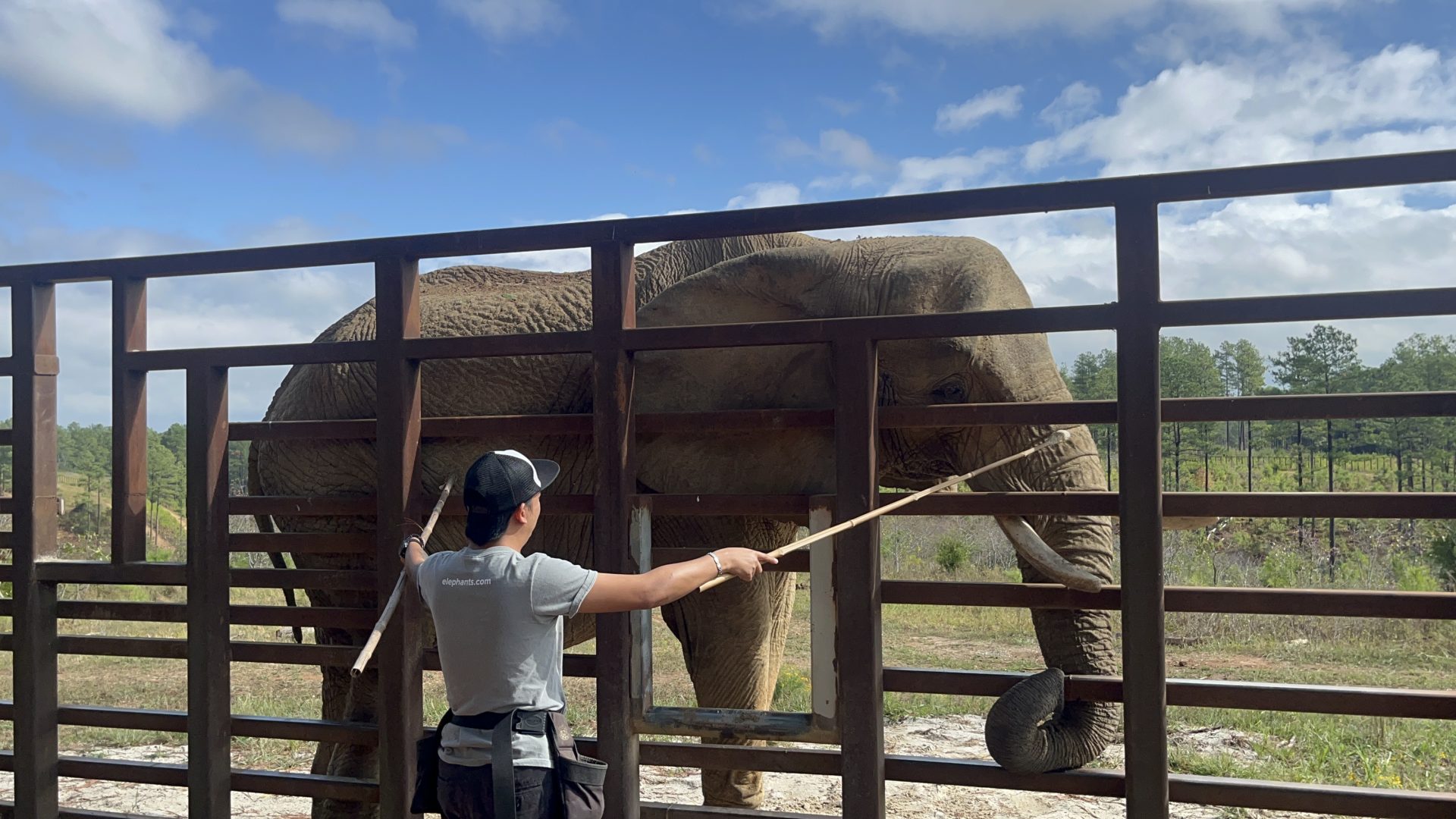
Captive elephant management in the 21st century: by all appearances it is as emotionally charged and contentious as it was in previous decades. Elephants continue to be the subject of unprecedented attention, scrutiny and debate. Numerous guidelines, standards and recommendations for all aspects of elephant care including housing, space, social groupings and training have been produced, with varying degrees of objective scientific evaluation (Clubb & Mason 2002; AZA 2003; Olson 2004; CCEW 2005). Consensus on management issues has been hampered by a lack of concise and candid information about each management system and the specific tools and techniques used and approved within it (AZA 2001; Olson 2004). Furthermore, both of the primary management systems,traditional free contact and the more recent protected contact, seem to be connected to distinctly different perspectives on how elephants are viewed, and managed, relative to other captive species…
Read the rest of the article: Protected Contact and Elephant Welfare below.
Managing Monkey Behavior: Advancing the Social Management of Old World Monkeys
Positive reinforcement training (PRT) is globally recognized as a valuable tool to enhance husbandry, management, and veterinary care given to captive animals – all while maintaining a high level of animal well-being. Innovative applications of PRT go beyond conventional uses and span a spectrum of strategies to enhance animal wellbeing; one such example is the use of PRT to enhance socialization of captive animals.
We know that providing social animals with an appropriate social setting is essential to their wellbeing, however, in captivity, social housing is not without challenges. The creation of cohesive social groups requires skill and knowledge from the human caregivers and may take time for animals to work through the introduction period. PRT techniques offer innovative methodologies to enhance socialization, facilitate introductions, encourage positive social behaviors, all while minimizing inappropriate social behavior. Through the skillful and creative application of PRT, animal welfare is enhanced when animals can engage in appropriate social behaviors thus creating a future of socially competent individuals.
Download the article: Managing Monkey Behavior: Advancing the Social Management of Old World Monkeys below

Prototyping Naturalistic Enrichment Features: A Case Study
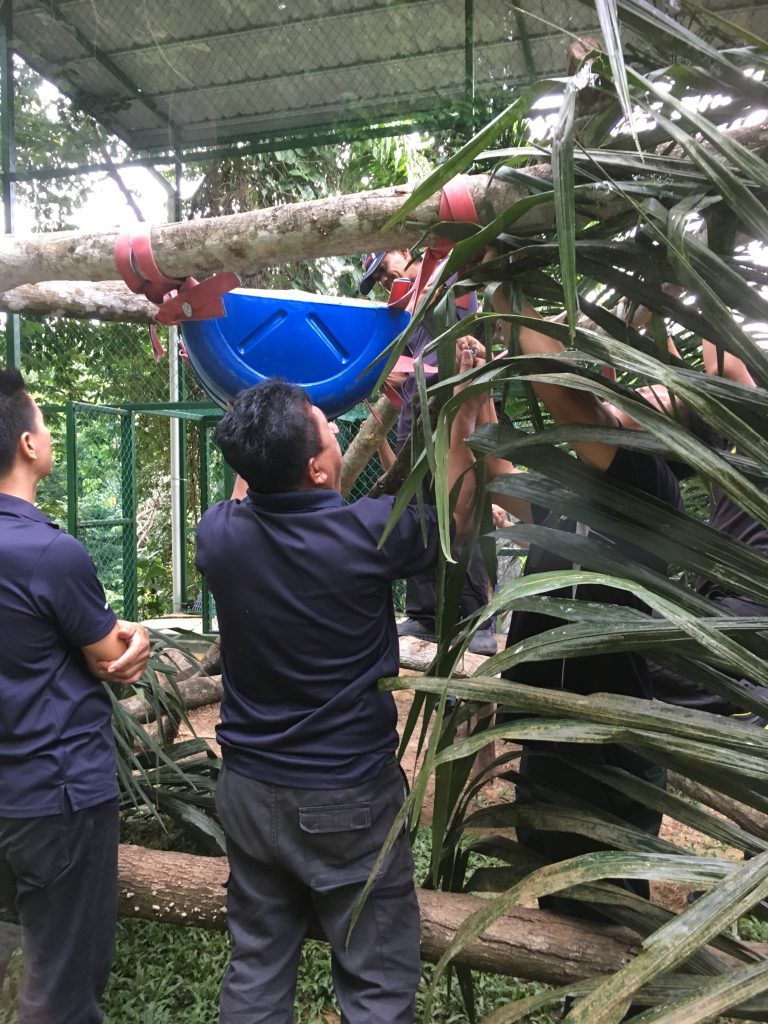
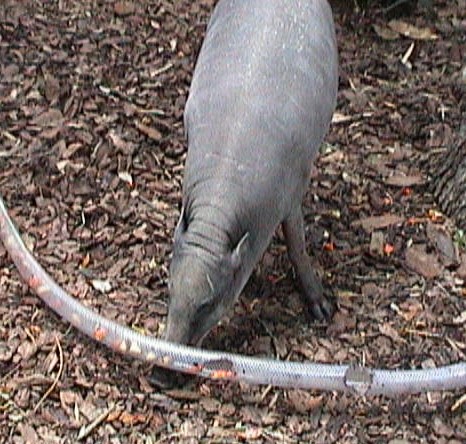
While working on the research and design phase of a naturalistic Asian rainforest exhibit for the California Science Center’s World of Ecology exhibit, we had the unique opportunity to research and develop innovative habitat components intended to showcase naturalistic behaviors. In many cases, the cost of designing and constructing truly naturalistic enrichment devices may not be worthwhile, particularly when it is uncertain how target taxa may respond. We were tasked with the challenge of designing, constructing, testing, and assessing naturalistic enrichment prototypes for siamangs (Hylobates syndactylus), babirusa (Babyrousa babyrussa), crocodile monitors (Varanus salvadorii), and Komodo dragons (Varanus komodoensis). Design objectives included: 1) striking a balance between ensuring sound husbandry while maintaining the natural appearance of the exhibit; 2) providing animals the opportunity and motivation to express species-typical behaviors; and 3) exploring enrichment options within the context of the natural exhibit design. Data were collected by observing animals that were well habituated to their enclosures. Analysis of the data provided valuable design insight and suggested that modifications range from none to some changes necessary to fully achieve design objectives.
Download the article: Prototyping Naturalistic Enrichment Features: A Case Study below.