POSITION STATEMENTS
Wild Welfare US’ Position on Key Issues Affecting the Welfare of Captive Animals
Wild Welfare US believes in a compassionate, empathy-based approach to animal welfare; we rely on scientific, evidence-based information to guide our trainings, resources, and positions on key welfare issues affecting captive wildlife around the world.
The very nature of captivity influences an animal’s welfare both directly and indirectly. Wild Welfare US is dedicated to promoting, teaching, and advancing practices which positively influence captive animal welfare. Additionally, we support the cessation of practices that compromise and diminish animal welfare. Our document, Core Standard of Welfare Practice for Captive Animals, provides an in depth review of requirements for the provision of positive animal welfare, however we feel that some practices or subject matter requires further clarification and/or emphasis and therefore, we have developed topic-focused Position Statements which are available here.
You can find our Position Statements below. For further information please CONTACT US.
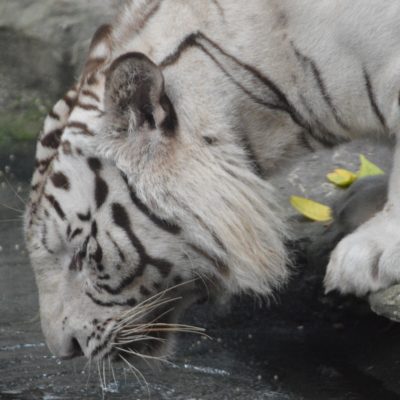
Purposeful Breeding of Rare Color Morphs
Wild Welfare US takes the position that purposeful captive breeding of rarely occurring color morphs (e.g., white tigers, lions, deer, alligators, boas and pythons) should cease due to welfare issues and public misperceptions surrounding white animals in captivity. Captive facilities housing individuals who carry these recessive genes must provide optimal care including welfare provision to yield exceptional physical, psychological, and behavioral health while preventing reproduction to promulgate these rare color morphs. Deleterious effects of inbreeding to achieve the white coloration are well documented and include neonatal mortality, reduced litter size, shorter life spans, as well as a multitude of associated health problems such as a compromised immune system, sensory defects, visual impairments such as strabismus, mental impairments, and developmental defects such as spinal problems, facial deformities, and cardiac defects.
Download the Selective Breeding of Rare Color Morphs position statement below.
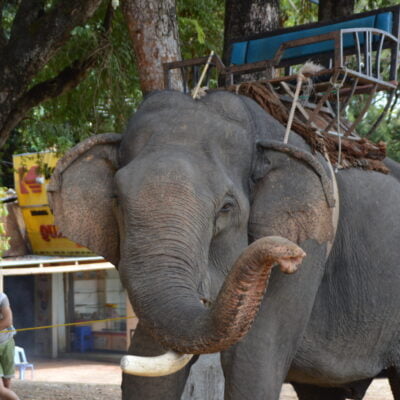
Elephant Riding
Wild Welfare US strongly supports that all elephants cared for by humans should have the opportunity to live rewarding and rich lives that enable them to carry out a robust representation of natural behaviors. Elephants must be given the opportunity to make choices about their physical and social environments to promote behaviors such as feeding and foraging, socialization, self-maintenance, and natural locomotion – all of which satisfy strong behavioral and biological needs.
Wild Welfare US considers situations in which elephants are ridden, for any purpose, to severely compromise the individual elephant’s welfare by limiting these positive welfare-critical behaviors. Additionally, when elephants are ridden, physical and psychological harm results from harsh, aversive training methodologies, and the equipment used causes physical wounding. Therefore, the practice of riding elephants should be stopped.
Download the Elephant Riding position statement below.