
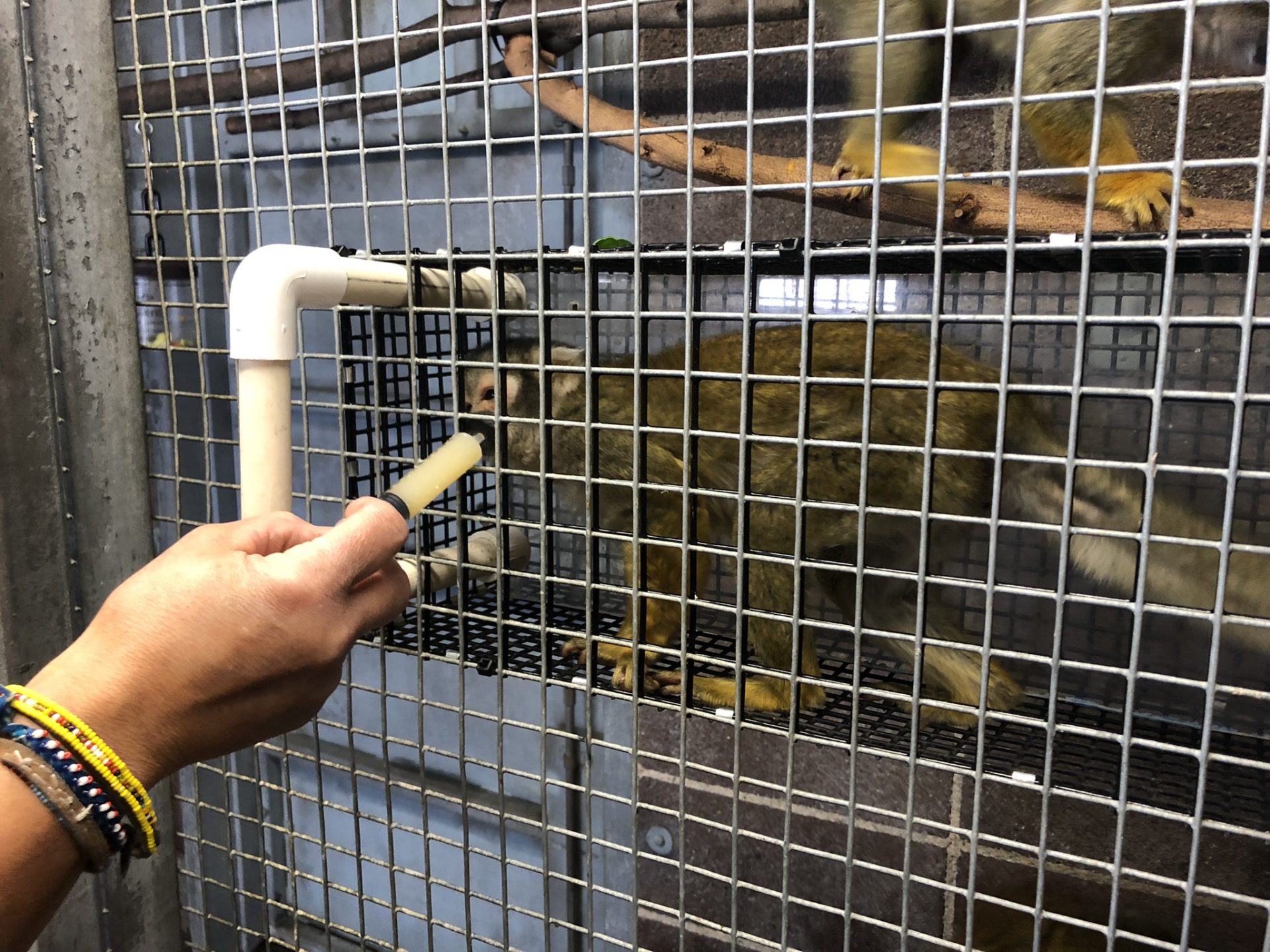
Wild Welfare US’ animal welfare and husbandry resources provide guidance and advice on the provision of good animal welfare in captivity. We promote the Behavioral Management approach to animal care, which was introduced tin 1994 by T. Desmond; it is described as a pro-active, holistic, systematic approach to the provision of animal care that yields optimal welfare outcomes. An animal’s behavior is a reflection of how that individual reacts with and to its environment, how it feels, and the culmination of its experiences provides insight to the welfare status. Behavior is important and always meaningful. Behavioral Management’s synergistic approach creates a highly responsive system to assess and address an animal’s dynamic needs throughout all life stages.
WWUS’ highly experienced teams help facilities build comprehensive behavioral management programs that are tailored to the facility’s needs and mission. These programs incorporate positive reinforcement training, environmental and behavioral enrichment, behavioral assessments and problem solving. We train animal caretakers, managers, and veterinary teams to implement these techniques and build sustainable programs with excellent welfare outcomes To learn more about behavioral management, read Animal Training, Enrichment and Problem Solving.
Animal training programs must keep animal welfare at the heart of programmatic objectives, therefore positive reinforcement training is the best choice to modify an animal’s behavior whilst maintaining a high level of animal welfare. Positive reinforcement training (PRT) can be used to address behavioral health, physical health, physical fitness, promote emotional and mental health, and achieve management and husbandry objectives. However, PRT is a skill that takes time to develop and is best done with a skilled mentor; Wild Welfare US can provide assistance to any facility interested in establishing or growing a positive reinforcement program as part of their behavioral management efforts.
Despite the availability of species-specific guidelines and animal welfare standards, access and use to these may limited due to language barriers, online access, cost, or cultural implications of practice. We provide accessible resources for continuing growth opportunities through our educational materials, in-person workshops, and webinars. These programs are designed for those directly involved in animal care to the highest levels of management within a facility, and also for those involved in the development of animal care guidelines or legislation. These materials and opportunities range from comprehensive program development to hands-on care and needs of specific species or taxonomic groups – see our Care for Us guides.
Wild Welfare’s animal welfare and husbandry e-learning program is specifically designed for staff who care for captive wild animals, and is designed to deepen the participant’s understanding of animal welfare, elements of optimal care provisioning, and we hope will create lasting and long-term changes to how those directly caring for wild animals conduct their daily activities – yielding a shift in the culture of care towards enhanced welfare.
Wild Welfare provides species-specific enrichment guides designed to enhance the animal caretaker’s understanding of species-specific needs and behaviors, and are available in multiple languages – see our E-Learning guides.
Learn More on our Enrichment page.